
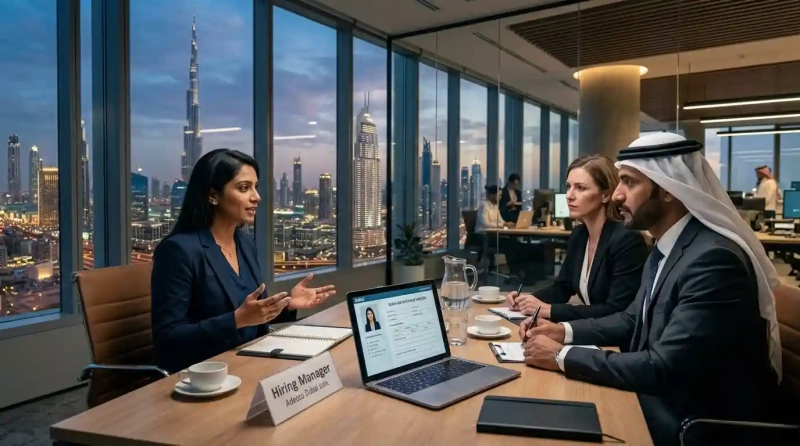
So, you finally broke the "ATS Wall." You got the email. You’ve been invited to interview at a big name—maybe serco jobs dubai, adecco dubai jobs, or a security giant like g4s dubai jobs. You’re excited, but also... terrified?
Here’s the thing about 2026: the "vibe check" has been replaced by a "data check." Interviews in Dubai aren't just chats; they are structured assessments designed to see if you’ll survive the city's high-pressure environment. Here is the unpolished truth about what goes on behind those glass doors.
Reality check: interviews are rarely straightforward
In many countries, an interview is a conversation. In Dubai, it’s a performance. Managers here are often dealing with massive churn (people leaving after 6 months), so they aren't just interviewing you for the role; they’re interviewing you for "Dubai Endurance."
If you sound like you’re just here for a "tax-free adventure," you’ve already lost. They want to hear that you have a 3-year plan. Fragments of a good answer won't cut it—they want a full narrative of stability.
HR screening vs hiring manager rounds
This is where most people trip up.
-
The HR Gatekeeper: Usually a 15-minute Zoom or phone call. They don't care about your deep technical skills. They care about two things: Visa Status and Salary Expectation. If you’re awkward about either, you don't move to Round 2.
-
The Hiring Manager: This is the "Can you actually do the work?" round. In 2026, expect a Technical Case Study. Whether it’s a coding test or a mock sales pitch, they want to see "Proof of Work" in real-time.
Common rejection triggers
-
The "Notice Period" Trap: If the company needs someone "immediately" and you have a 3-month notice period, you’re likely out. In the fast-moving UAE market, many roles are filled by the person who can start on Monday.
-
Salary Misalignment: If you didn't benchmark your salary before the call, and you ask for 50% more than their budget, the interview ends right there—even if they love you. They don't have the "budget flexibility" you might see in Europe or the US.
-
Cultural Tone: Dubai is a melting pot. If you come off as too aggressive or, conversely, too passive, you might be flagged as a "bad cultural fit" for a diverse team.
Salary negotiation reality
Let’s be real—negotiation is expected, but there’s a ceiling.
-
The Package Mindset: Stop looking at just the base salary. In 2026, the real wins are in the "Allowances." If they won't budge on the base pay, ask for a higher housing allowance, school fees for your kids, or a "performance-linked" bonus structure.
-
The "Walk-Away" Number: Know your cost of living. If the offer doesn't allow you to save at least 20% of your income, it’s a "poverty trap." Don't be afraid to walk away—it often makes them come back with a better offer.
How to stand out in interviews
-
The "First 90 Days" Plan: Don't wait for them to ask. Tell them exactly what you will achieve in your first three months. It shows you’re a "Plug-and-Play" hire.
-
Specific UAE Examples: If you’ve worked in the region, mention it. "When I worked on the project in JAFZA..." Local knowledge is worth its weight in gold.
-
The "STAR" Method (With a Twist): Situation, Task, Action, Result... and Revenue. Every answer should eventually lead back to how you saved the company money or made the company money.
If the interview feels "unpredictable," it’s usually because you haven't researched the company's specific government jobs Dubai connections or their local projects. And keep your guard up—if they ask for "visa processing fees" during the offer stage, it’s a scam. Check the red flags in job scams Dubai before you sign anything.
What’s the weirdest question you’ve been asked in a Dubai interview? Drop it in the comments below!